
 BOOK
BOOK 中文
中文
 Tender Hall
  Resource Center
Photocatalytic Equipment
 BusinessIntelligent Equipment
-
Introduction
Beyond Free Energy, New Guardians of Environmental Protection
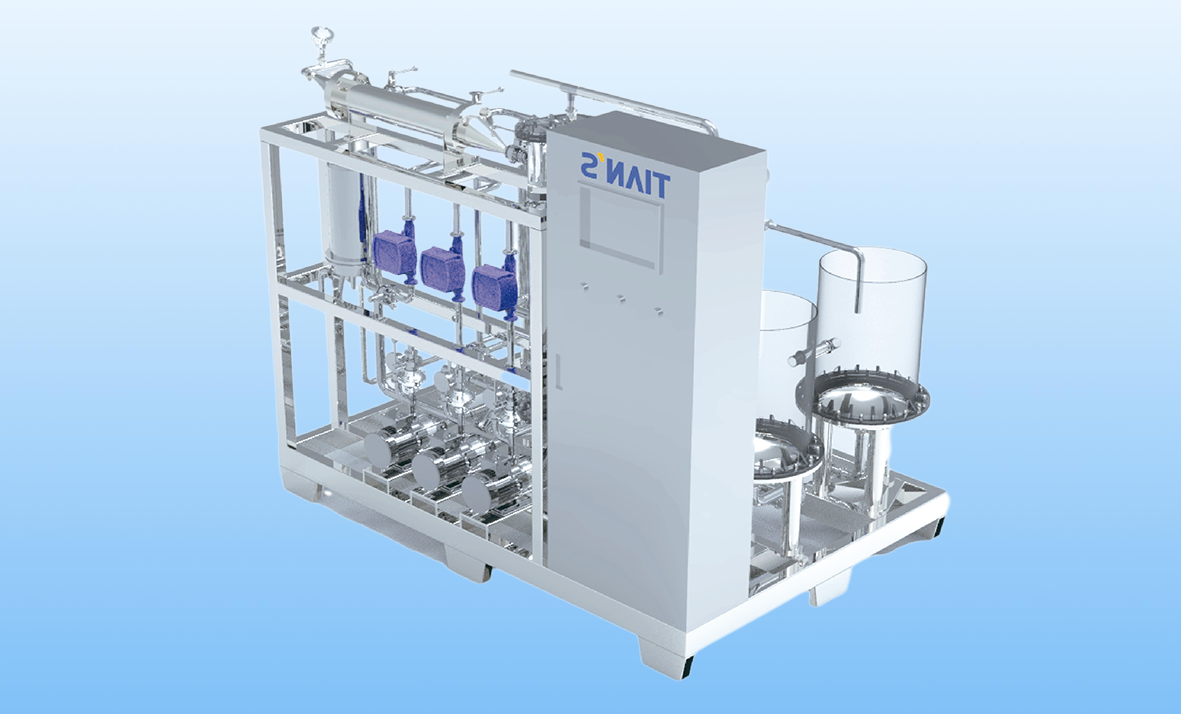
Photocatalytic oxidation wastewater treatment equipment is a type of wastewater treatment equipment that is based on the special chemical property of hydroxyl radicals (·OH) having high chemical activity, which can promote the oxidative decomposition of toxic, harmful, and difficult-to-biodegrade organic substances. It eliminates the toxicity of wastewater, improves the biodegradability of wastewater, and at the same time partially mineralizes organic matter, reduces pollution concentration, so as to achieve the harmless treatment of pollutants.
-
Technical Principles
-

-
Reaction Principle
The pollutant RH molecules in sewage are converted into excited free radicals R• after being energized by ultraviolet light irradiation; hydrogen peroxide is photolyzed into hydroxyl radicals under the action of a catalyst and ultraviolet light irradiation of an appropriate wavelength. A large number of hydroxyl radicals and excited R• are generated in the system, and the two undergo rapid oxidation reactions. At the same time, hydroxyl radicals also oxidize the pollutant RH.
-

-
Degradation Principle
Several different oxidation reactions open the rings, break the chains, and convert organic matter in wastewater into small-molecule organic compounds and carboxylic acids, and ultimately transform organic pollutants into CO₂ and H₂O. Meanwhile, during the reaction process, intermediate products containing functional groups such as -OH and -COOH increase significantly, thereby eliminating biological toxicity and significantly improving the biodegradability of wastewater.
Advantages
-
 Small footprint and easy maintenance
The modular design of the main equipment enables three-dimensional assembly with minimal footprint; maintenance is limited to periodic cleaning of the UV lamp tubes, resulting in reduced workload.
-
 A COD removal rate of over 60%, with significantly improved biodegradability
Dual catalysis by ultraviolet rays and catalysts results in high reaction efficiency, with the COD removal rate stably above 60%. The destruction rate of macromolecules is over 90%, biological toxicity disappears, and the biochemical removal rate is more than 90%.
-
 Less secondary pollution
The catalyst can be reused. Except for the trace suspended solids generated during the oxidation process, there is no secondary pollution caused by the catalyst. The device has a small volume, good sealing performance, and produces a small amount of exhaust gas.
-
 High efficiency in drug utilization with low consumption
The catalyst is reusable with minimal consumption. Under the dual action of ultraviolet light and the catalyst, the utilization rate of oxidants is high, effectively reducing the usage of oxidants.
-
 Fully automated operation with simple maintenance
Modular assembly, one-click startup, and fully automated operation. The process requires no manual intervention, only sample collection and testing, remote monitoring, and routine inspections.
Online Message
